Northern Quolls collapsed by more than 75% in the decade after cane toads crossed the Roper River. The mechanism is direct: a quoll eats a toad, the toad's bufotoxin stops its heart, and the quoll dies within minutes. There is nothing subtle about it.
Programs · Recovery · Kimberley / Top End
Save the Spotted Quoll
Save the Spotted Quoll is QED's longest-running program. It began as a single trapping transect on the Mitchell Plateau in 2014 and now spans nine monitoring sites across the Kimberley and the Top End.
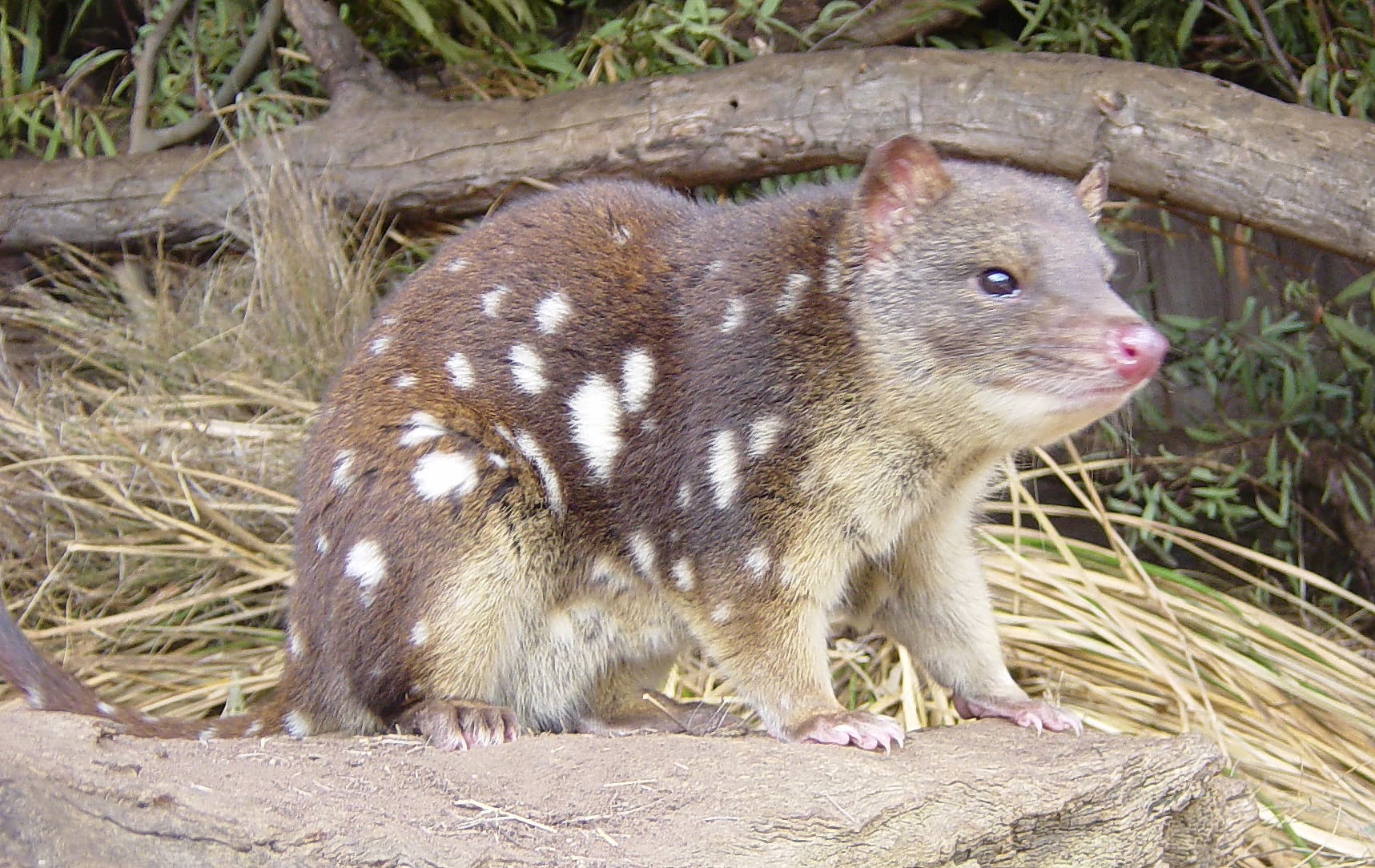
The program runs a nine-month field season. We trap, microchip, and collar individuals; we record body condition and breeding status; and we retain the spot pattern of every animal, because each quoll's spots are unique and let us re-identify it without a second capture.
Recovery work falls into three parts: translocating animals to toad-free islands, holding insurance populations in predator-free enclosures, and trialling conditioned taste aversion in juvenile cohorts before their first wet season. The translocation strand is funded as its own line item — see Support a project.
Support this work
Give to QED and the field team allocates where it is most needed, or back a specific line item under this program.